

❤️ Love it, guaranteed
Subtotal$0.00
Taxes & ShippingCalculated at next step


Best Wine for Cooking
By Austin Holdsworth
September 02, 2026
You're standing in the wine aisle with a recipe that calls for a splash of red or a cup of dry white, and you have two decisions to make. What do you actually buy, and is that bottle labeled "cooking wine" sitting near the vinegar worth grabbing so you don't open something you'll only use once. Here's the short version: skip the cooking wine, and buy something you'd pour into a glass. The long version explains why, and then gets specific about what to reach for depending on what's on the stove.
Cooking with wine is not a place to cut corners, even though it feels like one. The logic goes something like this: it's getting cooked down anyway, so why spend money on something good. But that thinking has it backwards. When wine reduces in a pan, the water cooks off and everything else concentrates, including the flaws. A wine that tastes thin, sour, or flat straight from the bottle doesn't mellow out in a sauce. It gets more thin, more sour, and more flat, and now it's stuck in your bolognese for good.
Heat doesn't hide a bad bottle. It exposes it. A wine with real fruit, some structure, and a clean finish reduces into something rich and layered. A wine that's already thin and harsh reduces into something thinner and harsher, just with less liquid to dilute it. This is the entire reason professional kitchens keep a bottle of something drinkable on hand rather than reaching for whatever's cheapest. You don't need a splurge bottle for a weeknight ragu, but you do need something you'd actually enjoy a glass of while you cook, because that same glass is what ends up in the pot.
That bottle labeled "cooking wine" sitting on the shelf between the vinegar and the soy sauce is not a lesser version of real wine. It's a different product entirely, and it's worth knowing why before you reach for it.
Cooking wine has salt added to it, along with sweeteners and preservatives to extend its shelf life. That's not an accident or a flavor choice. Under alcohol regulations, adding salt reclassifies the product as "salted wine" rather than a beverage, which means it's exempt from the taxes and licensing rules that apply to drinking wine. That's why you can buy it off a regular grocery shelf without showing ID, and why it can sit at room temperature indefinitely without going bad. It was engineered to dodge the beverage-alcohol category, not to taste good in a sauce.
The salt content is the real problem in your kitchen. A couple tablespoons of cooking wine can carry a meaningful amount of sodium, which throws off the seasoning of a dish before you've even added the salt the recipe calls for. Reduce it down the way you would a good wine, and that sodium concentrates right along with everything else, leaving you with a sauce you have to fight to balance. Add the preservatives and the harsh, flat flavor those additives leave behind, and you end up with a dish that tastes like it was cooked with something out of a bottle that's been sitting in a cabinet for two years. Because, functionally, that's exactly what it was.
The fix is simple. Buy a wine meant for drinking, even a modest one, and use that instead. You control the salt. You control the flavor. And you're not cooking with something formulated around a tax code.
You don't need a wine you'd bring to a dinner party. You need a wine with clean, honest fruit and enough acidity to hold its own once it reduces. For red sauces and braises, that means something with real dark fruit and a bit of savory depth, not a wine that's already thin before it hits the pan. For white sauces, seafood, and risotto, you want crisp acidity and citrus character that can cut through cream or butter instead of disappearing into it.
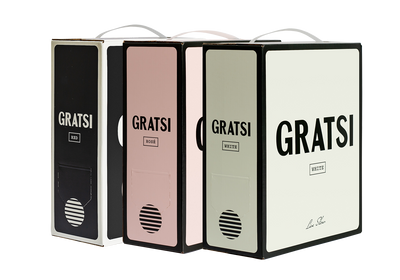
This is where a 3-liter box earns its keep in a way a bottle can't. Most recipes ask for a cup of wine, maybe two. A standard bottle holds about four cups, so unless you're also serving wine with dinner, you're left with an opened bottle losing freshness on the counter for the rest of the week. Gratsi's box format holds the equivalent of four bottles and, once opened, stays fresh for 30 days. That means you pour out what the recipe needs today, and the rest is still good for your next braise, your next risotto, or just a glass on a Tuesday, instead of turning into vinegar in the back of the fridge. It's a genuinely practical fix for the "I only needed a cup" problem that comes with cooking from an open bottle.
Gratsi Red Wine and Gratsi White Wine are both built for this kind of use, and if you're shopping for the cook in your life rather than your own kitchen, the same box works as a genuinely useful wine gift. The red is a blend of Malbec, Merlot, Cabernet Franc, Grenache, and Syrah, sourced from France and Italy, with a dark ruby color, a nose of black fruit and savory spice, and juicy tannins that hold up under heat. The white is a Sauvignon and Chardonnay blend from France, intensely aromatic and dry, with pink grapefruit notes and a mineral finish that stays bright even after it reduces. Full serving facts for each are below, in case you're tracking what's going into dinner.
Gratsi Red Wine: 13% Alcohol by Volume, 117 calories, 1g carbs per serving.
Gratsi White Wine: 11.5% Alcohol by Volume, 93 calories, 1g carbs per serving.
Anything built around tomatoes, garlic, and a slow simmer wants a red wine with enough fruit and structure to stand up to hours on the stove. Gratsi Red Wine is the one to reach for here. Its dark fruit and savory spice deepen a tomato base instead of just adding acidity, and it's exactly what a puttanesca needs to bring together olives, capers, and anchovies into something that tastes like it simmered all afternoon.
Braises are where a good cooking wine really proves itself, because the wine isn't a background note, it's a main structural ingredient. A pot of beef in Gratsi Red Wine turns tough cuts tender over low heat while the wine's tannins soften into something silky. The same logic applies to a traditional Italian beef braciole with Gratsi Red, where the wine braises the rolled, stuffed beef until it falls apart, and to a tagliatelle bolognese, where a cup of red wine deglazes the pan after you brown the meat and builds the base the whole sauce is built on.
Even a plate of homemade gnocchi, tossed in a simple red sauce, gets more depth from a splash of Gratsi Red Wine reduced with garlic and crushed tomatoes than it would from an unseasoned pan.
Risotto is one of the clearest examples of why the wine you cook with matters, because you taste every stage of it as you build the dish. The wine goes in early, right after the rice toasts in the pan, and it needs to add brightness without turning sharp. Gratsi White Wine, with its crisp citrus character, is what a mushroom risotto wants here. It lifts the earthiness of the mushrooms instead of getting buried under them, and because you're tasting and adjusting as the risotto cooks, a wine with harsh, flat notes has nowhere to hide.
Deglazing is the fastest way to see the difference between a good cooking wine and a bad one, because the technique is almost entirely about that one splash of wine. You sear something in a hot pan, pull it out, and pour in wine to lift all the browned bits stuck to the bottom, which is where most of the flavor in the dish is sitting. A dry white like Gratsi White Wine works well after searing chicken, fish, or shrimp, since it stays bright and doesn't fight with delicate proteins. Gratsi Red Wine does the same job after searing beef, lamb, or mushrooms, where you want that deglazed liquid to reduce into something rich enough to spoon over the meat.
Cream and butter mute flavor, so the wine you cook with needs enough acidity to still come through once it's folded into a sauce. Gratsi White Wine is the one for this. A fettuccini with shrimp in a Gratsi White sauce leans on that citrus brightness to keep the cream from tasting heavy, and mussels in a Gratsi White sauce use the same wine with garlic and a little butter to build a broth that's rich but not flat. Both dishes fall apart with the wrong wine, either something too sweet that turns the sauce cloying, or something thin that disappears the moment cream hits the pan.
Poaching is a slower use of wine, where the fruit sits in liquid over gentle heat and slowly takes on its color and flavor. A poached pear in Gratsi Red Wine sauce is the clearest example. The pear simmers in red wine with a bit of sugar and spice until it turns a deep garnet and the wine reduces into a syrup you spoon over the top. Because the fruit spends real time in that liquid, a wine with genuine dark fruit character matters even more here than it does in a quick pan sauce. Thin, flat wine gives you a thin, flat syrup.
Buy a wine you'd drink, not one formulated to dodge a tax bracket. Keep Gratsi Red Wine on hand for tomato sauces, braises, and anything that simmers low and slow, and keep Gratsi White Wine around for risotto, seafood, cream sauces, and deglazing after you sear something delicate. And if the "half a bottle left over" problem is what's been sending you toward the cooking wine aisle in the first place, a 3-liter box that stays fresh for 30 days solves that for good. It's a lower-waste habit too, not just a convenient one, since a box generates a fraction of the packaging that four separate bottles would. Pour a cup for the recipe, cork nothing, and the rest is still good next week.