

❤️ Love it, guaranteed
Subtotal$0.00
Taxes & ShippingCalculated at next step


Dry Rosé Wine
By Austin Holdsworth
September 02, 2026
You've had this thought at least once, probably around minute forty of a dinner party. One glass of red and a dull throb sets up shop behind your eyes. Someone at the table says the two words everyone reaches for: "must be the sulfites."
It's a tidy explanation. It's also, for almost everyone who's ever blamed a bottle, wrong.
Sulfites have become wine's most convenient scapegoat, the ingredient people point to when a wine headache shows up and a real answer doesn't. But the science tells a more interesting story, and understanding it means you can stop avoiding wines that were never the problem in the first place. It also means understanding something the wine industry doesn't advertise loudly enough: truly sulfite-free wine doesn't exist. Not the natural stuff, not the organic stuff, not the small-production bottle from the guy at the farmers market who swears he adds nothing. If it's wine, it has sulfites.
Here's what's actually going on, and what "sulfite-free" really means when you see it on a label.
Let's start with the thing everyone actually wants to know: why does wine give you a headache?
Cleveland Clinic neurologist Dr. MaryAnn Mays has studied this, and sulfites barely make her list of usual suspects. The more likely culprits:
Histamines. Wine produces these naturally during fermentation, and they're a known trigger for headaches, congestion, and that stuffy, achy feeling that mimics a mild allergic reaction. Red wine carries notably more histamine than white, which is part of why red wine gets blamed more often. If you've noticed you can drink white without issue but red sends you reaching for aspirin, histamines are a much stronger suspect than sulfites, which are present in both.
Tannins. These come from grape skins, seeds, and stems, and they're what give red wine its dry, gripping structure. In sensitive people, tannins can trigger the release of serotonin and constrict blood vessels, which is a documented headache pathway. Again: this points at red wine specifically, not sulfites, which appear in white and rosé too.
Quercetin. This one is newer to the conversation. Quercetin is a flavonoid concentrated in grape skins, and recent research suggests that when it combines with alcohol in your body, it converts into a compound that interferes with how efficiently you break down acetaldehyde, a byproduct of alcohol metabolism that's linked to headaches and flushing. It's an active area of study, but it's a more compelling lead than sulfites ever were.
Alcohol and dehydration, plain and simple. Alcohol is a diuretic. It dilates blood vessels. It disrupts sleep even when it helps you fall asleep faster. Two glasses of wine on a day when you didn't drink enough water is a headache waiting to happen, and it has nothing to do with what's in the bottle beyond the alcohol itself.
Genetics. Roughly 40% of people of East Asian descent carry a variant of the ALDH2 enzyme that slows the breakdown of acetaldehyde, making them considerably more prone to flushing and headaches after even modest alcohol intake. This is a real, well-documented biological difference, and no amount of sulfite avoidance changes it.
So where do sulfites actually fit in? For a small subset of people, they matter, but not in the way most people assume.
True sulfite sensitivity exists. It's just much rarer than the internet suggests, and it shows up as something different than a headache.
According to Cleveland Clinic, sulfite sensitivity is most strongly linked to asthma, not headaches. About 4% to 5% of people with asthma have some form of sulfite sensitivity, and their reactions tend to be respiratory: wheezing, coughing, chest tightness, shortness of breath, a runny or stuffy nose, sometimes hives. In rare, severe cases it can trigger a genuine asthma attack. What it doesn't typically cause, per the clinical literature, is a headache.
That distinction matters. If you're asthmatic and you've noticed wine makes your chest feel tight or your breathing labored, that's worth a real conversation with an allergist, and sulfites are a legitimate lead to chase. If your symptom is a headache and nothing else, the research points you elsewhere: histamines, tannins, dehydration, or simply how much you had and how fast.
Here's the part that surprises most people: sulfites aren't just something winemakers add. They're a natural byproduct of fermentation itself.
When yeast converts grape sugar into alcohol, the process generates sulfur dioxide as a matter of course, the same way bread dough naturally produces a bit of alcohol as it rises. This happens whether or not a winemaker adds a single additional milligram of sulfites for preservation. Every wine made anywhere, by anyone, using any method, contains some level of naturally occurring sulfites simply because it went through fermentation.
Which means "sulfite-free wine" is, strictly speaking, a myth. What people actually mean when they use that phrase, and what most producers mean when they market a wine that way, is "no added sulfites." That's a real and meaningful distinction, just a different one than the label implies. A wine with no added sulfites still has naturally occurring sulfites from fermentation. It just doesn't have the extra dose winemakers sometimes add afterward to help the wine keep longer and resist spoilage or oxidation.
This is also why you'll see "Contains Sulfites" printed on almost every wine bottle in the country, including plenty of wines their producers describe as low-intervention or natural. The FDA and the Alcohol and Tobacco Tax and Trade Bureau require that warning on any wine testing at 10 parts per million or more of total sulfur dioxide, whether those sulfites were added on purpose or simply showed up as fermentation did its work. Given how little it takes to cross that threshold, virtually every wine on a shelf carries the label. It's not a red flag. It's just chemistry, disclosed.
If wine reliably gives you a headache, chasing "sulfite-free" bottles is likely to leave you disappointed, because you'll still react to wines that meet that description since the sulfites were probably never your issue. A few things worth trying instead:
Go lighter on tannins and histamines. White and rosé wines generally carry less of both than reds, so if a headache shows up specifically after red wine, that swap alone may solve it.
Hydrate like you mean it. A glass of water between glasses of wine addresses the dehydration piece directly, and it's the single most controllable factor on this whole list.
Pace yourself and eat something. Alcohol metabolizes more predictably on a full stomach, and slowing down gives your body more time to process acetaldehyde before it builds up.
Pay attention to quantity, not just type. If two glasses feel fine but four don't, that's alcohol and dehydration talking, not the wine's ingredient list.
Talk to a doctor if breathing is involved. A headache alone rarely signals true sulfite sensitivity. Wheezing, chest tightness, or hives after wine is a different situation and worth checking with an allergist.
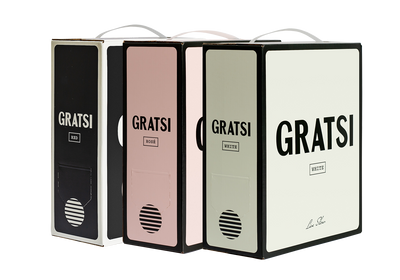
We're not going to tell you Gratsi wines are sulfite-free, because as you now know, no wine is. What we can tell you is what's actually in the bottle, or in this case, the box: grapes, yeast, and sulfites. That's the full ingredient list for Gratsi Red Wine, Gratsi White Wine, and Gratsi Rosé Wine. No mystery additives, no fifteen-item panel to squint at.
Each 3L box holds the equivalent of four bottles and stays fresh for 30 days after opening, thanks to the same wine-in-a-box format that's quietly won over people who used to assume boxed wine meant a compromise. It doesn't. It means you get to pour a real glass of Gratsi Red Wine (13% Alcohol by Volume, 117 calories, 1g carbs per serving), Gratsi White Wine (11.5% Alcohol by Volume, 93 calories, 1g carbs), or Gratsi Rosé Wine (12% Alcohol by Volume, 117 calories, 1g carbs) any night you feel like it, without an open bottle going sad and vinegary on the counter by Thursday.
If you're the type who reads labels closely, that low-carb profile probably already caught your eye. We wrote a whole guide on that side of things too, covering what "sugar-free" actually means on a wine label and why it's a different question entirely from sulfites. Worth a read if you're building a short list of what actually matters when you're choosing a bottle, or a box, with a clearer head. Check out our complete guide to sugar-free wine for the rest of that story. And if you want the deeper numbers on how sugar, carbs, and dryness actually relate, we go further into that here.
Next time someone at the table blames the sulfites, you'll know enough to change the conversation. It's rarely the sulfites. It's usually just wine doing what wine does, and now you know how to work with it instead of around it.