

❤️ Love it, guaranteed
Subtotal$0.00
Taxes & ShippingCalculated at next step


Natural Wine vs. Organic Wine
By Austin Holdsworth
September 02, 2026
Somewhere between the farmers market and the wine bar, "natural" and "organic" started getting used like they mean the same thing. A bottle gets called "natural" because it's unfiltered. Another gets called "organic" because the label has a leaf on it. A shop clerk tells you a wine is "basically the same as organic, just funkier." None of that is quite right, and the confusion isn't your fault. These two words come from completely different systems, one legal and one not, and the wine industry has done very little to keep them straight.
Here's the short version, and then we'll go deep on both.
Organic wine is a legal, regulated term in the United States. It's overseen by the USDA, and a wine either qualifies or it doesn't, based on specific rules about how the grapes were farmed and whether sulfites were added.
Natural wine has no legal definition in the U.S. at all. It's a winemaking philosophy, built around the idea of intervening as little as possible between grape and glass, and it's "enforced" only by producers, importers, wine bars, and festivals agreeing among themselves on what counts.
That single distinction, one term is regulated and one isn't, explains almost every point of confusion people run into. Let's break down each one properly.
In the U.S., "organic wine" isn't a vibe. It's a specific legal category defined by the USDA's National Organic Program (NOP), and it comes in two tiers that get lumped together constantly, even though they're meaningfully different.
This is the strict version, the one that can carry the actual USDA Organic seal on the bottle. To earn it, a wine has to clear a fairly long list of requirements:
That last point matters. "Organic wine," in the true USDA sense, isn't a marketing choice a winery makes on its own. It's an audited status, similar to how a food product earns the right to say "USDA Organic" on a cereal box.
This is the category most self-described organic wines fall into, and it's genuinely a different thing, not a lesser version of the same claim.
To use "made with organic grapes" on a label:
So a wine can be entirely organic in how the fruit was grown and still not qualify as "organic wine" in the strict labeling sense, purely because of a sulfite addition during the winemaking process. This is the single most common source of confusion in the whole category, and it's worth sitting with for a second: two bottles can both say "organic" somewhere on the label and mean two different, TTB-defined things.
Both categories are overseen jointly by the USDA (for the organic certification itself) and the Alcohol and Tobacco Tax and Trade Bureau, or TTB (for how any of it is allowed to appear on a wine label). A producer can't just decide to print "organic" on a bottle. Both agencies have to sign off.
Now for the term with no rulebook.
Ask five people in the wine industry to define natural wine and you'll get five overlapping but not identical answers, and every one of them will be correct, because there's no legal standard for any of them to be checked against. In the United States, "natural wine" is not defined, regulated, or certified by any government body. A winery can put "natural" on a label with essentially the same latitude as putting "handcrafted" or "small-batch" on it.
What natural wine does have is a fairly consistent set of practices that most people in the space agree on, even without a rulebook enforcing them:
Because none of this is written into law, "who decides" a wine counts as natural comes down to a patchwork of informal authority: importers with a reputation for only carrying natural producers, wine bars that curate natural-only lists, festivals like RAW WINE that vet exhibitors before letting them pour, and word of mouth within a fairly tight-knit producer community. It functions more like a genre than a regulation, closer to how "farm-to-table" gets used by restaurants than how "organic" gets used on a cereal box.
There's one real exception worth knowing about, because it's the closest thing to an official natural wine standard anywhere. In France, a group of producers called the Syndicat de Défense des Vins Naturels created a private certification called Vin Méthode Nature, and in 2020 got it formally recognized by France's national agricultural institute, INAO. It sets actual thresholds: grapes must be organically or biodynamically farmed, fermentation has to use wild yeast, and sulfite additions at bottling are capped at 30 milligrams per liter (with a "no sulfites added" tier for wines that skip that step entirely). It's a real, monitored standard, but it's a French private-sector certification adopted with government approval, not a U.S. one, and the word "natural" itself still can't legally appear on an EU wine label because of unrelated EU labeling rules. No comparable system exists in the United States.
Here's how the categories actually compare, across the dimensions that matter most.
USDA Certified Organic Wine. Legally defined by the USDA's National Organic Program. Grape farming has to be 100% certified organic. Added sulfites are prohibited, meaning only the naturally occurring amount from fermentation, generally under 10 ppm. There's no rule either way on filtering or fining. Yeast has to be certified organic too. A USDA-accredited third-party certifier verifies the whole chain annually, and this is the only category allowed to carry the USDA Organic seal.
"Made With Organic Grapes." Also legally defined by the USDA's National Organic Program. Grape farming has to be 100% certified organic, same as the tier above. Added sulfites are allowed, up to 100 ppm, and must be disclosed on the label. There's no rule either way on filtering or fining. Yeast has no organic requirement. A USDA-accredited third-party certifier still verifies it annually, but this category cannot carry the USDA Organic seal.
Natural Wine. No legal definition in the U.S. Grape farming is usually organic or biodynamic, but that's not independently required or verified. Added sulfites are typically low or none, but there's no enforced limit. Filtering and fining are usually avoided or kept minimal. Native, wild yeast fermentation is the norm. There's no certifying body in the U.S., just informal vetting from importers, wine bars, and festivals (France has a private certification called Vin Méthode Nature). The claim comes down to the producer's word, or an importer or retailer's own curation standards, and it can't carry the USDA Organic seal.
Conventional Wine. Not a marketed "category," but still subject to standard TTB and FDA wine rules. There's no organic requirement for how the grapes are farmed. Added sulfites are allowed up to the U.S. legal maximum of 350 ppm total sulfur dioxide. Filtering and fining are standard practice. Commercial yeast strains are standard. There's no special certifying body, and it cannot carry the USDA Organic seal.
A few things jump out when it's laid out this way. Sulfites are the clearest dividing line between the two organic tiers, not farming practice, since both require the same organic grape standard. And natural wine is the only category here where nobody outside the winery is required to check anything.
Because sulfites show up in every one of those categories above, it's worth untangling why they matter so much.
Sulfur dioxide is a preservative. It occurs naturally in all wine as a byproduct of fermentation, typically somewhere between 5 and 20 parts per million even in wines where nothing was added on purpose. Winemakers have also been adding it on purpose for centuries because it does two useful things: it stops unwanted bacteria and wild yeast from spoiling the wine, and it slows oxidation, which is what turns wine brown and flat.
In the U.S., any wine with 10 ppm or more of total sulfur dioxide, whether it got there naturally or was added, legally has to say "contains sulfites" on the label. The overall legal ceiling for conventional wine is 350 ppm, though most wines sit well under that, often in the 50 to 150 ppm range depending on style. White and dessert wines generally run higher than reds, because reds get some natural protection from tannins.
None of this makes sulfites something to be afraid of. The amount in a glass of wine is small relative to what naturally occurs in foods like dried apricots, and the "sulfite headache" myth has been fairly thoroughly debunked. But sulfites are the one lever regulators actually pull when defining "organic wine," which is why the ppm thresholds matter more here than they would in almost any other wine conversation.
This is the question underneath most of the searching that leads people here, and the honest answer is: better at what?
Natural wine tends to taste more alive and less predictable. Because it isn't fined, filtered, or standardized the way conventional wine usually is, the same producer's bottling can taste different from one vintage to the next, sometimes even bottle to bottle. Fans describe this as more expressive, more connected to a specific place and year. Critics describe the same variability as inconsistent, and sometimes flawed, since without careful winemaking, minimal-intervention wine can also mean funky, cloudy, or oxidized in a way that wasn't intended. Both of those reactions can be true of the same bottle depending on who's drinking it.
Organic wine, meanwhile, is a farming and additive story more than a flavor story. Choosing organic wine mostly means you're supporting vineyard practices without synthetic pesticides and herbicides, which is a real and verifiable thing, but it doesn't promise a particular taste experience the way "natural" implicitly does.
Neither one is automatically "better" than a well-made conventional wine, and neither is automatically healthier in a way that's been proven. What each one actually gets you is a different set of tradeoffs: organic wine gets you a government-audited farming and (for the strict tier) sulfite standard. Natural wine gets you a winemaking philosophy and, often, a more unpredictable glass, backed by trust in a specific producer or importer rather than a government checkmark. If you care specifically about how the grapes were farmed and want that verified by someone other than the winery itself, organic is the term with actual teeth. If you care about minimal intervention in the cellar and are fine trusting a curator's taste instead of a regulator's paperwork, natural is the term you're actually looking for.
A few practical rules, based on everything above:
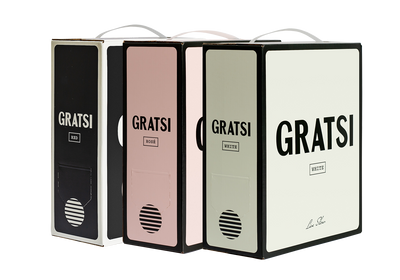
Gratsi isn't certified organic, and it doesn't claim to be a natural wine. We want to be straightforward about that, because this is exactly the kind of topic where it's easy for a brand to blur the lines, and we'd rather not. What we can say plainly is that some of what natural and organic wine both push back against, unnecessary additives, sugar dumped in to mask a cheap wine, ingredient lists nobody can read, is the same thing we've built Gratsi around. Every Gratsi Red, White, and Rosé wine lists exactly three ingredients: grapes, yeast, and sulfites. No added sugar. Nothing unnecessary.
That's a different promise than a USDA seal or a natural-wine importer's curation, and we're not going to pretend it's the same thing. But if the reason you're researching this topic is wanting a wine with a short, honest ingredient list and no added sugar, that part, at least, is something we already do. If you're curious how we think about sugar specifically, our complete guide to sugar-free wine goes deeper into that side of the label, and our breakdown of sugar-free versus low-sugar wine covers exactly how those numbers relate.
Either way, now you know what you're actually asking for the next time a bottle says "organic," and what you're not being promised when one says "natural."