

❤️ Love it, guaranteed
Subtotal$0.00
Taxes & ShippingCalculated at next step


What Are Wine Additives?
By Austin Holdsworth
September 04, 2026
Pick up almost any bag of chips or box of crackers and you can read exactly what's in it, down to the preservatives. Pick up a bottle of wine and you'll find the brand, the alcohol content, a government health warning, and not much else. That's not an oversight. It's how wine labeling law has worked for close to a century, and it means a lot of what actually goes into a bottle of wine legally doesn't have to appear on it anywhere.
Here's the detail that trips most people up: wine labels aren't regulated by the FDA. They're regulated by the TTB, the Alcohol and Tobacco Tax and Trade Bureau, under a legal framework that predates the FDA's modern food-labeling rules and was never folded into them. The FDA still sets safety standards for the substances winemakers are allowed to use, but it doesn't review or approve what shows up on a wine label. That job belongs entirely to the TTB.
What the TTB actually requires on a label is narrow: brand name, class or type, Alcohol by Volume, net contents, who bottled it, and a government health warning. Beyond that, the specific federal rule covering what winemakers are allowed to add during production, 27 CFR 24.246, lists dozens of approved materials and treatments. It's a real, specific regulation, but it doesn't produce a single clean headline number the way a lot of wine marketing likes to claim. Numbers like "70 additives" or "over 200 additives" show up often enough online that they've started to feel like fact, but none of them trace back cleanly to that regulation, and wine trade publications have pushed back on brands that use inflated, uncited counts to make their own products sound cleaner by comparison. The honest version of this story doesn't need a shock number. The regulation itself is the story.
The reason most of what's permitted under that rule never shows up on a bottle comes down to one distinction: whether a substance remains in the finished wine or gets used and removed before bottling.
Sulfites are the one major exception, and the TTB requires "Contains Sulfites" on the label whenever sulfur dioxide is present at 10 parts per million or higher, which covers nearly all wine, since sulfites also occur naturally during fermentation. That's the one additive-related disclosure federal law actually mandates. (Here's what that label actually means, and who really needs to pay attention to it.)
Almost everything else that's permitted falls into one of two buckets that explain why it stays off the label:
Fining agents are used to clarify wine, pulling out proteins, sediment, or cloudiness before bottling, and they're removed along with whatever they bind to. Isinglass, gelatin, egg whites, casein, and bentonite clay are common examples. None of them remain in the bottle you drink, which is the regulatory logic for why they don't need to be listed.
Acidity adjusters like tartaric, malic, and citric acid are permitted additions, but they're also compounds that occur naturally in grapes, which is part of why they're treated as ordinary winemaking tools rather than something a label needs to flag.
A few other permitted materials are more about style than safety. Grape color concentrate, sometimes called Mega Purple, is used by some producers to deepen a red wine's color. Oak chips, staves, and oak flavoring are legal alternatives to aging in actual oak barrels. Neither is dangerous. Both are more of a debate about winemaking tradition among wine purists than a health question, which is a very different conversation than "hidden chemicals."
It's worth being direct about what this article is and isn't saying. Most of what's permitted under wine treating regulations is the same kind of GRAS ("generally recognized as safe") ingredient used across the food industry generally, not something unique or alarming to wine. The federal government has itself pushed back on marketing language like "clean wine," calling it a misleading term when it's used to imply that wine without certain additives is meaningfully safer or healthier than wine with them.
The real story here is structural, not sinister: alcohol labeling grew up as its own separate legal track, under a different agency, with different disclosure requirements than the food label rules most people are used to reading. That's a genuinely interesting fact about how wine regulation works. It doesn't need to be inflated into something scarier to be worth knowing.
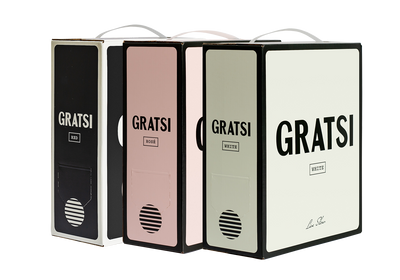
Gratsi's own ingredient list is short on purpose: grapes, yeast, and sulfites. That's it, for every wine in the lineup. Gratsi Red Wine, Gratsi White Wine, and Gratsi Rosé Wine are all made with no added sugar, and all three are vegan and gluten-free. Full serving facts for every wine are posted at gratsi.com/facts, including Alcohol by Volume and calories per serving, because a short ingredient list is only useful if you can actually go check it.
That's not a claim that every other wine on the shelf is doing something wrong. Plenty of the permitted materials covered above are standard, unremarkable parts of making wine at any scale, used by serious producers everywhere. It's simply a straightforward answer to a question worth asking about anything you drink regularly: what's actually in this, and can I find out easily if I want to.
You don't need to memorize a federal regulation to drink wine with a little more context. The useful takeaway is simpler: a wine label not listing an ingredient doesn't mean nothing was added, and it doesn't mean something was hidden either. It means alcohol labeling operates under different rules than the cereal aisle, rules that were written decades before "clean label" was a phrase anyone used in a grocery store.
If that's a question that matters to you, the fix isn't decoding a label that was never designed to answer it. It's looking for producers who publish what's actually in the bottle in the first place, the same way you'd check a nutrition label on anything else you buy regularly, and treating a short, legible ingredient list as a feature worth looking for rather than something to assume by default. It's the same instinct behind asking what actually separates a natural or organic wine from a conventional one: knowing the real answer beats repeating a number nobody's checked.