

Happiness guaranteed or money back.
Subtotal$0.00
Taxes & ShippingIncluded


Wedding Drink Station Ideas
By Achilleas
May 05, 2026
A wedding bar gets visited more than any other surface in the room. More than the dinner tables. More than the dance floor. People drift toward it between everything else, and what they see when they get there sets the tone for the next four hours.
A drink station, done right, is the room's center of gravity. It pours drinks without a bartender bottleneck. It looks like the couple put thought into it. And it stays beautiful from cocktail hour all the way through the last toast.
Here's how to plan one.

Hiring a full bar staff used to be the default, and at a 200-person black-tie reception it still is. For everything else, a self-serve drink station does the job better.
A few reasons. Bartenders are an hourly cost that scales with the length of the reception. A drink station is a one-time setup. Lines at a single bartender slow the night down. A two- or three-zone drink station spreads the traffic. And guests at a self-serve bar tend to pour what they actually want instead of ordering what's easiest. (Which usually means more wine, less liquor, and a calmer dance floor.)
The format also lets the couple lean into design. A bartender behind a portable bar is a service. A drink station is a piece of the decor.
The cleanest wedding drink station thinks in zones, not in one long table. Spread the traffic across four areas and the bar runs itself.
Wine zone. Reds at room temperature, whites and rosés on ice, glassware stacked alongside. This is the highest-volume zone at almost every wedding.
Beer and seltzer zone. A galvanized tub with ice, bottles and cans submerged. Bottle opener tied on with twine.
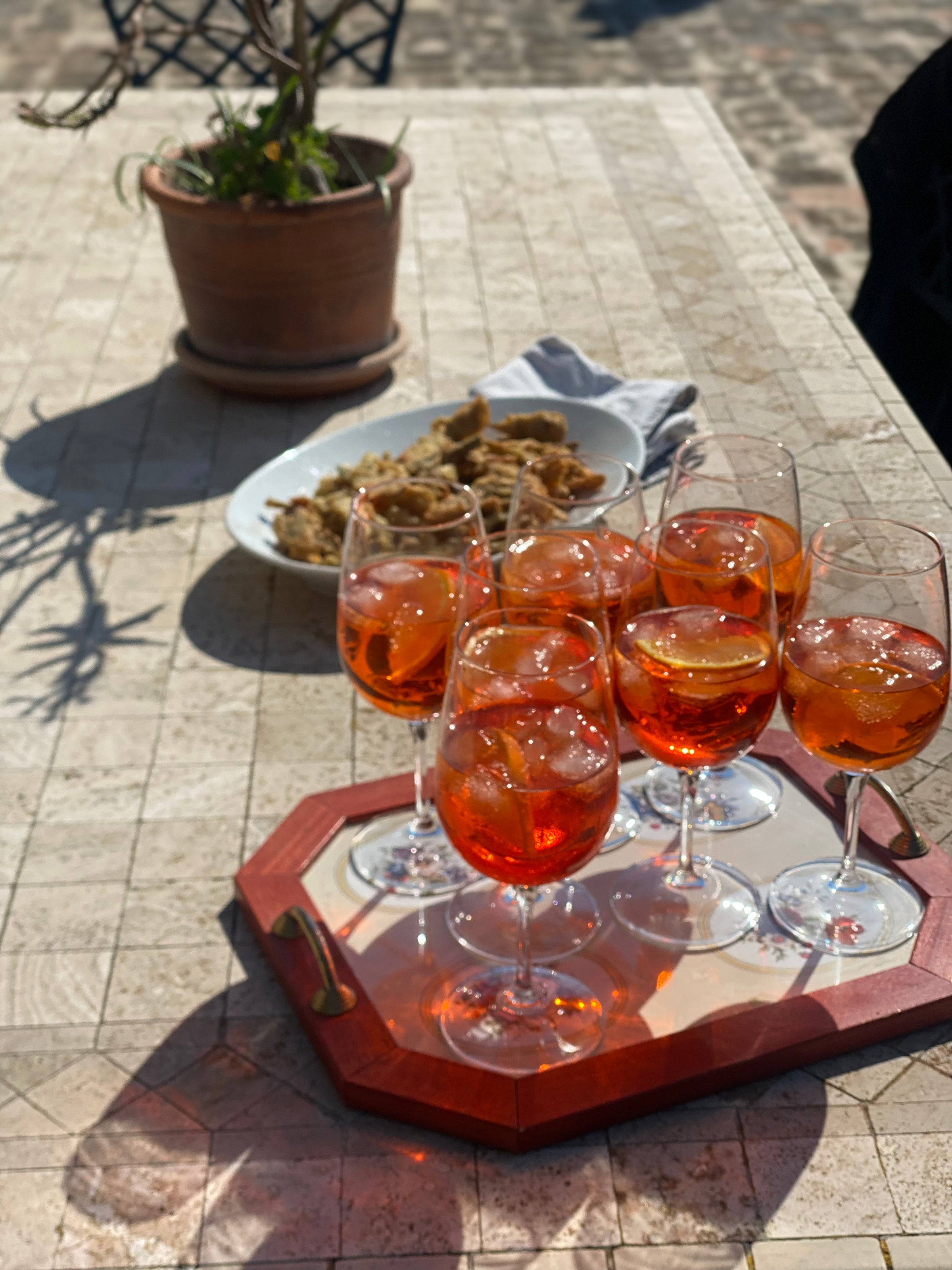
Signature cocktail zone. One batched cocktail in a glass dispenser. Glasses, garnish, ice on the side. This is the design moment.
Non-alcoholic corner. Sparkling water, lemonade, citrus, fresh herbs. The most overlooked zone at most weddings, and the one that gets visited more than couples expect.
Place the zones a few steps apart on the same surface or across two adjacent tables. Guests pick a zone and pour. The bottleneck disappears.
Wine is the workhorse of a wedding drink station. Plan it first.
The simple version: one red, one white, one rosé. Three options is enough for almost any guest count under 200. Two options (a red and a white) is enough for most weddings under 75. Adding a fourth (a sparkling for sipping, separate from the toast pour) is a nice touch, not a requirement.
Glassware can be one universal stem (a small Bordeaux glass works for everything) or two stems (red and white). One universal cuts the rental order in half and most guests can't tell the difference past the first sip.
For quantities, plan one bottle's worth (or one box's worth, divided down) per three guests for a four-hour reception. Our Wedding Alcohol Calculator does the full count by guest number and reception length.
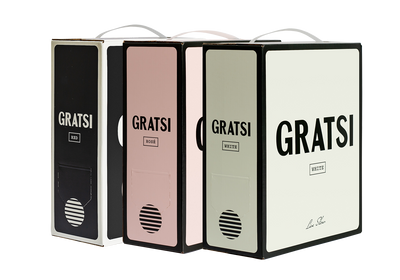
Boxed wine is the format the wedding drink station was built for. One 3L box holds the equivalent of four 750ml bottles, which is 20 glasses at a 5oz pour. The tap eliminates the corkscrew problem. The bag-in-box stays fresh for 30 days after opening, so leftovers don't go to waste. And a knocked-over box loses a few pours, not a shattered mess on the dance floor.
A few practical notes on serving boxed wine well at a wedding.
Decant or display. Two ways to go, both work. The first is to decant into a glass carafe or pitcher in the middle of the table. Refill from the box out of sight. The second is to set the box itself on the bar with a chalkboard sign and let it be the box. Modern boxed wine is designed to look good on a table, and guests take the cue from there. We made the full case in Why Boxed Wine Is a Great Option for Your Wedding.
Chill whites and rosés in advance. A box chills faster than a bottle because the bag is in direct contact with ice. Submerge the box fully in an ice-water tub for 45 minutes before service. A galvanized tub on a bar cart, lined with ice, makes a beautiful wine cooler.
Stack one backup. A second box of the favored varietal in a cool spot, ready to swap in. If the first box runs dry mid-toast, the swap takes 10 seconds.
Label clearly. A small chalkboard or paper sign with the varietal, the region, and a one-line tasting note. Guests are more confident pouring when the wine is named. (And it gives shy guests something to talk about while they pour.)
A handful of modern boxed wines are real table wines built for freshness. Gratsi Red Wine, Gratsi White Wine, and Gratsi Rosé Wine are dry, fruit-forward Mediterranean-style wines with no added sugar, vegan and gluten-free, and were voted America's #1 Boxed Wine by USA Today. Use the wines you like best. The format is what makes the station run.
Keep this one simple. A galvanized tub or a large copper bucket. Fully submerged ice. A range of three or four options: one light, one heavier, one local craft, one hard seltzer. Bottle opener and a small trash can next to the tub for caps.
Beer quantities run roughly one bottle per guest per hour for the percentage of the crowd that's drinking beer. For a mixed crowd, plan about 30% of the total drink count as beer. For a more beer-leaning crowd (younger, summertime, casual), bias closer to 40%.
The visual cue: don't put beer in a fridge. Put it in a tub with ice. The ice is the design.
One batched cocktail. Not three. Not five. One.
Three reasons to keep it singular. First, batching lets the cocktail sit in a glass dispenser on the table, which is the design moment of the whole bar. Second, one cocktail teaches itself: guests don't need a recipe card to figure it out. Third, it sets a frame. "The bride's drink is the spritz. The groom's is the bourbon highball. Pour what you like." That's a story. Five batched cocktails is a confused buffet.
Pick a cocktail that scales well. Anything stirred with vermouth or sparkling wine works. Anything that requires shaking with citrus and a fresh egg white does not. Spritzes batch beautifully (we have a few in our archive, including Spritz alla Bianca Rosa and Cucumber Spritz). Negronis batch beautifully. Punches batch beautifully.
The setup: a large glass beverage dispenser with a spigot. A small bowl of garnish (citrus wheels, fresh herbs, olives, whatever the drink calls for). A printed card with the name of the drink and one line of context. A separate ice bucket so the dispenser doesn't get diluted.
This is the zone most weddings underdo, and the easiest one to get right.
Sparkling water with a citrus carafe. Fresh lemonade or a flavored shrub. Sometimes a third option: cold-brew iced tea, agua fresca, a non-alcoholic spritz. Glassware that matches the rest of the bar (don't relegate the NA section to plastic cups, it sets a tone).
Roughly 25% of any reception crowd will gravitate here at some point during the night. Pregnant guests. Designated drivers. People taking a break between drinks. People who simply don't drink. Treating the NA corner like part of the bar (not a polite afterthought) reads as care.

The difference between a drink station that reads as "the couple set up a folding table" and one that reads as "this was on purpose" usually comes down to three or four moves.
The surface. A wood farmhouse table reads warmer than a banquet table. A bar cart reads more intentional than a folding table. A reclaimed door across two sawhorses reads like the couple actually thought about it. The surface is the bones.
The backdrop. Something behind the bar. A draped linen sheet. A trellis with greenery. A vintage mirror leaning. A neon sign with the couple's last name. Anything that gives the station a back wall. A drink station floating in the middle of a lawn looks unfinished. The same station with a backdrop looks designed.
The signage. Hand-lettered chalkboard, printed menu cards, or a single cursive sign. Tell guests what's on offer. Confused guests don't pour.
The greenery. Olive branches, eucalyptus, or whatever's growing nearby, laid loose across the bar. One bowl of lemons. Done. Florals are great but optional. Greenery and citrus do most of the work.
The lighting. Two candles or a lantern on the bar at dusk. Once the sun's down, the bar should glow.
A loose Mediterranean palette travels well at a self-serve bar. Wood, linen, terra-cotta, citrus, herbs, olives. Built into the table and the photos look the same way.
A drink station fails in three places, and they're all logistical.
Ice. Wedding bars run through more ice than couples plan for. Roughly 2 lbs per guest for a four-hour reception, more in summer. Buy double what you think. Store the surplus in a cooler on the lawn, refilling the bar tub every 90 minutes.
Glassware refills. A self-serve bar without enough glasses is a disaster. Plan two glasses per guest. (One they leave somewhere, one they're holding when they realize the first is gone.) Stack clean glassware on the bar in tidy rows. Have a stationed bin for empties so they don't accumulate on the surface.
The garbage problem. Empty boxes, bottles, cans, garnish trim. Plan a discreet bin and a second behind-the-scenes bin behind a planter or the backdrop. Brief one helper on the day-of team to sweep the bar every 30 minutes. (See the backyard reception planning piece for more on the day-of helper structure.)
A handful of touches that elevate a self-serve bar without adding cost.
An aperitivo hour. Set a smaller drink station 30 minutes before the main bar opens, with one signature cocktail, one wine, and a plate of olives and almonds. Italian-style, low-pressure. (We've written about the aperitivo tradition if it's the mood you're after.)
A late-night espresso station. A second small zone after dinner. Espresso, amaro, a tray of biscotti. Picks up the back half of the night when the bar slows down.
A self-serve sparkling station for the toast. Pre-poured flutes on a tray with a help-yourself sign, refilled by a helper. Eliminates the bartender pouring 100 toasts in three minutes.
A printed menu card per table. Tells guests what's at the bar without making them walk over to read the chalkboard. Doubles as a keepsake.
A favorite wines card from the couple. A small note explaining why each wine is on the bar. ("The rosé is from the trip we took to Provence." "The red is the one we serve on Sundays.") Personal, charming, costs nothing.
Day before:
Morning of:
During the reception:
End of night:
A wedding drink station works because it's two things at once. It's the place guests go for a drink, and it's a piece of the room's design. Done well, it pours faster than a single bartender, looks better than a portable bar, and makes the night feel like the couple actually hosted the wedding instead of paying someone else to host it.
Pick four zones. Style the surface. Label everything. Stack ice and glassware twice as deep as you think. The bar takes care of itself from there.
If you want to taste a few wines before building the station, a Gratsi Wine Sampler Kit sends individual bottles of Gratsi Red Wine, Gratsi White Wine, Gratsi Rosé Wine, and Gratsi Sparkling White Wine to your door. And our Wedding Alcohol Calculator sizes the full order by guest count and reception length.