

Happiness guaranteed or money back.
Subtotal$0.00
Taxes & ShippingCalculated at next step


Chilled Red Wine
By Austin Holdsworth
June 30, 2026
There used to be a whole conversation before anyone put a red wine in the fridge. Should you? Is that allowed? Will a sommelier appear in your kitchen and confiscate the bottle? That conversation is basically over. According to The Drinks Business, searches for "should red wine be chilled" are down 4% year over year, while searches for the "chilled red wine trend" itself are up 20%. Translation: people aren't asking permission anymore. They're past that question and onto the next one, which is what to drink and how cold to get it.
Google's Summergeist Trends Report named chilled red wine one of the defining food and drink trends of summer 2026, and the data backs it up from every angle: search behavior, restaurant menus, social media, and a noticeable shift in how people actually shop for wine. This isn't a niche wine-bar habit anymore. It's a Tuesday.

"Should red wine be chilled" is still the single highest-volume question in this entire search cluster, and it deserves a straight answer: yes, for the right reds, at the right temperature. Not every red wants to go in the fridge, and the ones that don't (big, tannic, heavily oaked styles like Cabernet or Barolo) get worse cold, not better. Chilling sharpens tannins and mutes fruit on those wines.
But for lighter, higher acid, lower tannin reds, a chill is a genuine upgrade. According to Decanter, colder temperatures on the right red brighten acidity, lift fruit aromatics, and soften the perception of tannin, which is a fancy way of saying the wine tastes more refreshing and less heavy. So the real question isn't "is chilling red wine allowed." It's "is this the kind of red that benefits from it."

"Do you chill red wine" is the second most-searched question in this space, and most of the answer comes down to one outdated assumption: room temperature. The instruction to serve red wine at "room temperature" was written for old European stone cellars sitting around 60 to 64 degrees. Most homes today, especially across the South and Southwest, run a solid 10 to 15 degrees warmer than that. At 75 degrees or higher, a red wine isn't being served at room temperature anymore. It's being served warm.
Chilling it back down to somewhere in the 55 to 60 degree range isn't a trend for its own sake. It's a correction for central heating and modern houses that the original rule never accounted for.
A few other things lined up at the same time. The natural wine movement spent the better part of a decade producing lighter, higher acid, lower intervention reds, and that style quietly trained a lot of wine drinkers to expect something that's actually better cold. That sensibility didn't stay contained to the natural wine aisle. It spread into the mainstream.
Generation also plays a real role here. IWSR found that Gen Z wine drinker participation jumped from 46% to 70% between 2023 and 2025, and that generation is the most open to non-traditional serving styles, alternative formats, and discovering wine through a video instead of a sommelier. Wine Enthusiast has tracked the same shift, noting that younger drinkers are reshaping the category from the ground up. A lot of the chilled red conversation started on social media first and reached traditional wine media second, which is part of why it spread so fast.
"Red wine temperature" is one of the broadest gateway searches in this space, and the answer changes depending on the wine. There's no single magic number for "chilled red," because different styles want different ranges:
The common thread across all of them is body and acid, not color. A red that's light, juicy, and naturally high in acidity is built to handle a chill. A red that's dense, tannic, and oak-driven is not, and chilling it usually does it a disservice.

"Can you chill red wine" tends to come from people who already have a bottle open and zero patience. The good news is that chilling red wine doesn't take long. Twenty to thirty minutes in a regular refrigerator gets most light reds into the right range. An ice bucket gets there faster, usually in 10 to 15 minutes, since the ice and water combination pulls heat out more efficiently than a fridge. If the wine overshoots and gets too cold, give it a few minutes out of the fridge before pouring. That's the entire method. No special equipment, no waiting overnight.
"Chillable red wine" is the term the wine trade actually uses, even though regular drinkers search for it far less often than more casual phrasing like "chilled red wine" or "red wine chilled." Despite the lower search volume, it's a useful term for understanding which styles fall into this category by design, rather than by accident.
The reds that were built for a chill:
These styles share the same DNA: light body, high acid, soft tannin. That combination is exactly what stays balanced and refreshing instead of going flat or harsh when it's served cold.
If "best red wine to chill" is the question, the answer isn't a single bottle. It's a profile. Look for reds described as light-bodied, high acid, or low tannin, and lean toward Mediterranean and warm-climate grapes over heavy, oak-aged styles. Forbes put together a dedicated guide to chillable reds in June 2026, and the recommendations all land in the same territory: fruit-forward, easy-drinking reds that were never trying to be heavy in the first place.
That's also a fair description of what's been happening across the restaurant industry. Chillable reds have become, according to multiple trade sources, one of the fastest-growing segments on wine lists, showing up everywhere from casual wine bars to food media roundups. This is no longer a curiosity. It has professional backing.
This is usually the part where a brand claims credit for starting a trend. We didn't start this one. We just happened to already be built for it.
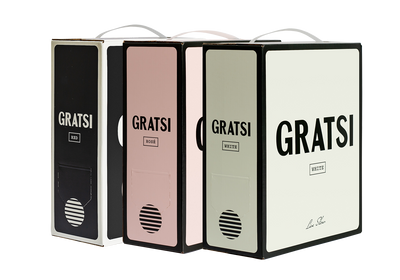
Gratsi Red Wine is a Mediterranean-style blend, made for the table rather than a special occasion, and it was never trying to be a heavy, tannic red in the first place. That means a slight chill doesn't fight the wine, it just opens it up the same way it does for Beaujolais or Grenache.
The format helps too. Gratsi comes in a 3L box, which works out to four bottles in one box, and it stays fresh for 30 days after opening. A bottle of red sitting on the counter starts fading after a day or two once it's open. Gratsi Red Wine just sits in the fridge, cold and ready, for weeks at a time, which fits the way people are actually drinking chilled reds: a glass here, a glass there, whenever the night calls for it, not all in one sitting.
There's no added sugar in the blend either, which matters more than it sounds like it should. Residual sugar can leave a red feeling heavy and a little syrupy once it's cold. Gratsi Red Wine's zero sugar profile keeps a chilled glass clean and refreshing instead. See serving facts at gratsi.com/facts.
So if the only thing standing between you and a cold glass of red was the lingering question of whether you're allowed to do it: you are, and you have been for a while. Pour it cold, pour it at room temperature, pour it both ways in the same week. Gratsi Red Wine isn't picky about it, and at this point, neither is anyone else.